16th Street Corridor
Restore the corridor.
Rebuild the economy.
Keep the community in the upside.
A five-year master redevelopment blueprint for 16th Street in North Lawndale — from stabilization to housing, commerce, health, heritage, and resident wealth.
THE VERIFIED BASELINE
North Lawndale has scale, need, land, and an economic case for intervention.
These figures come from CMAP's June 2026 Community Data Snapshot, primarily using 2020–2024 ACS data and CMAP's 2023 land-use inventory.
Employment inside North Lawndale2023 LEHD
Land-use reality2023 CMAP
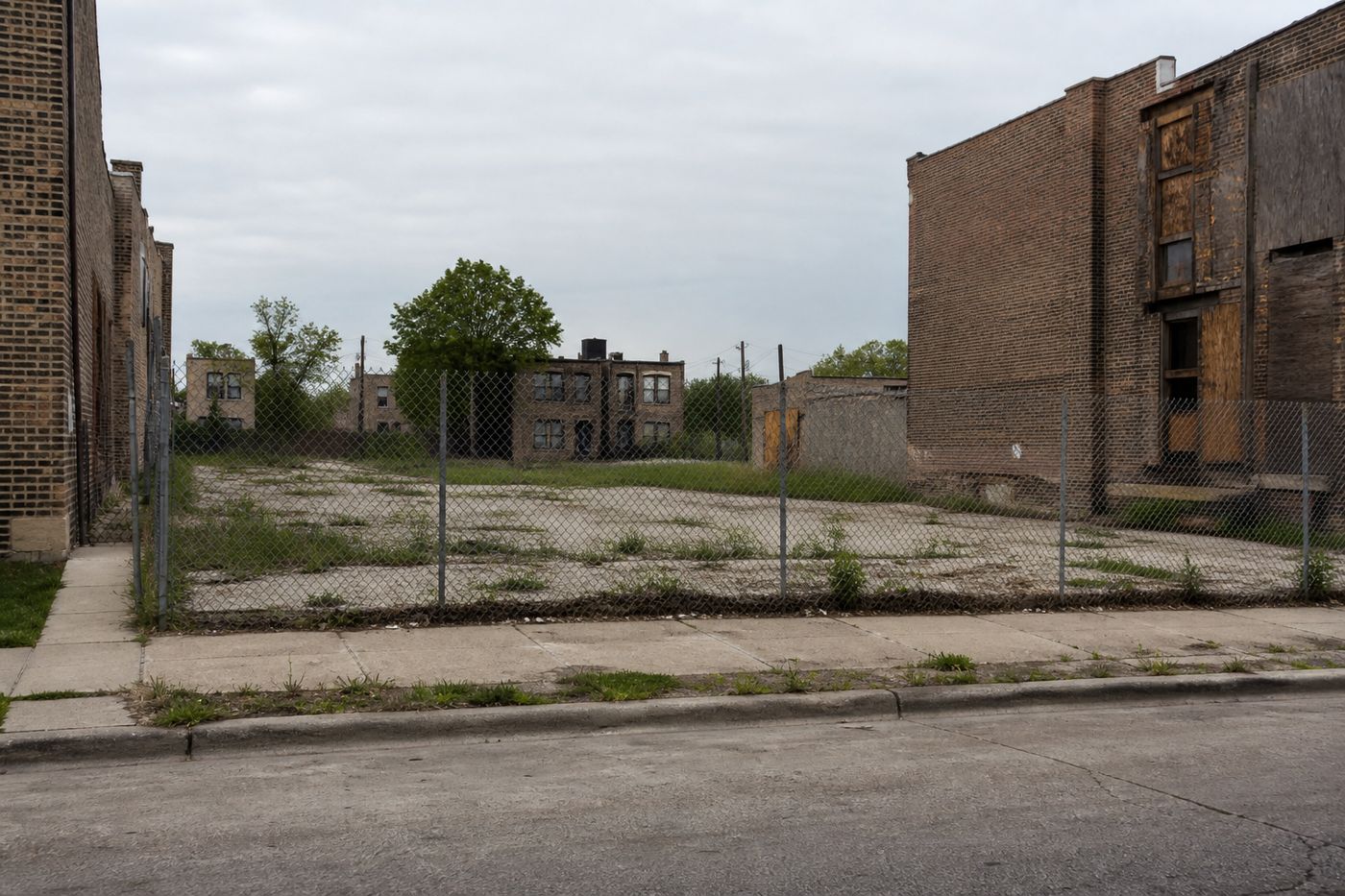 305.6 acres vacant · 14.9% of community land
CURRENT CONDITIONS → FUTURE STATE
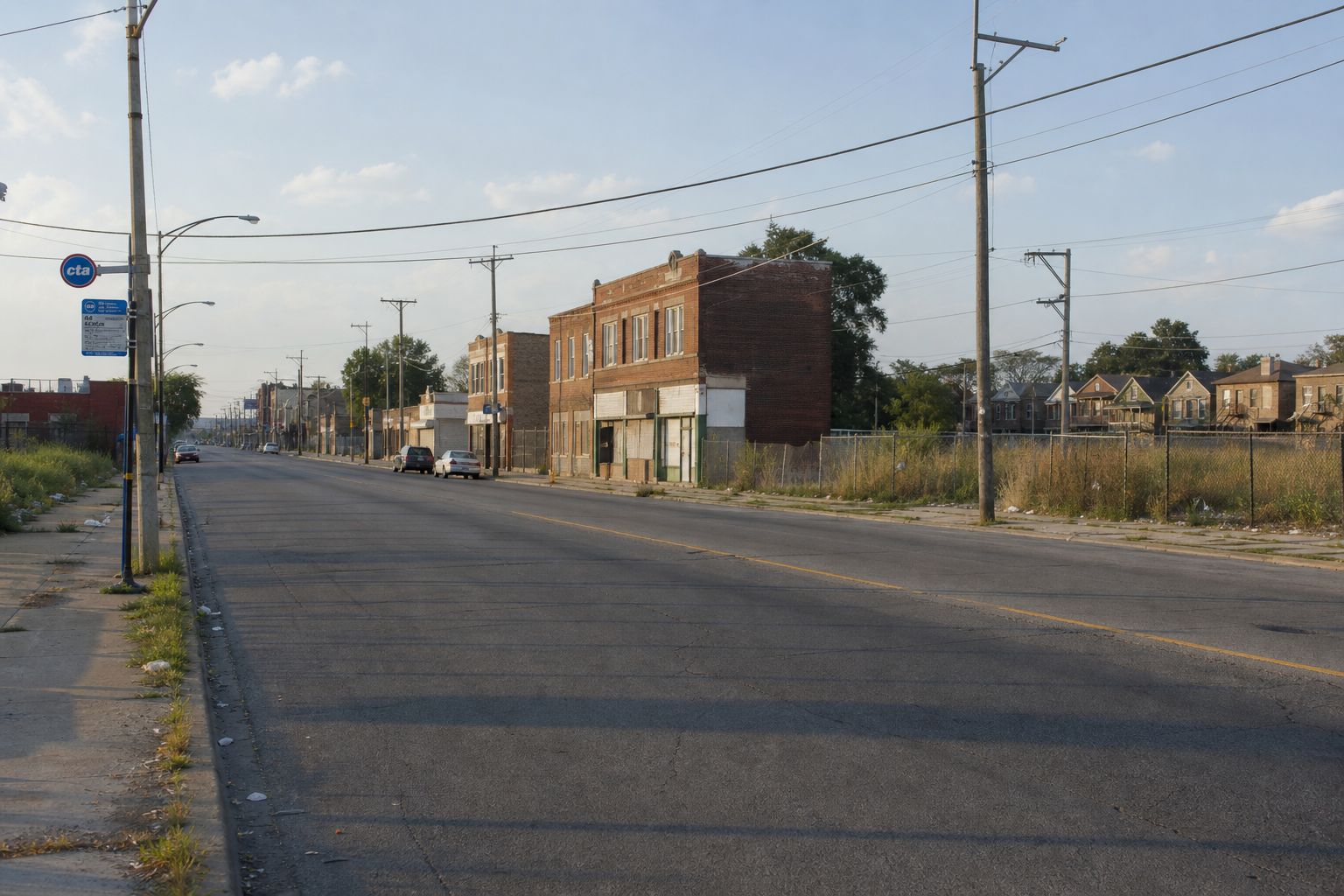
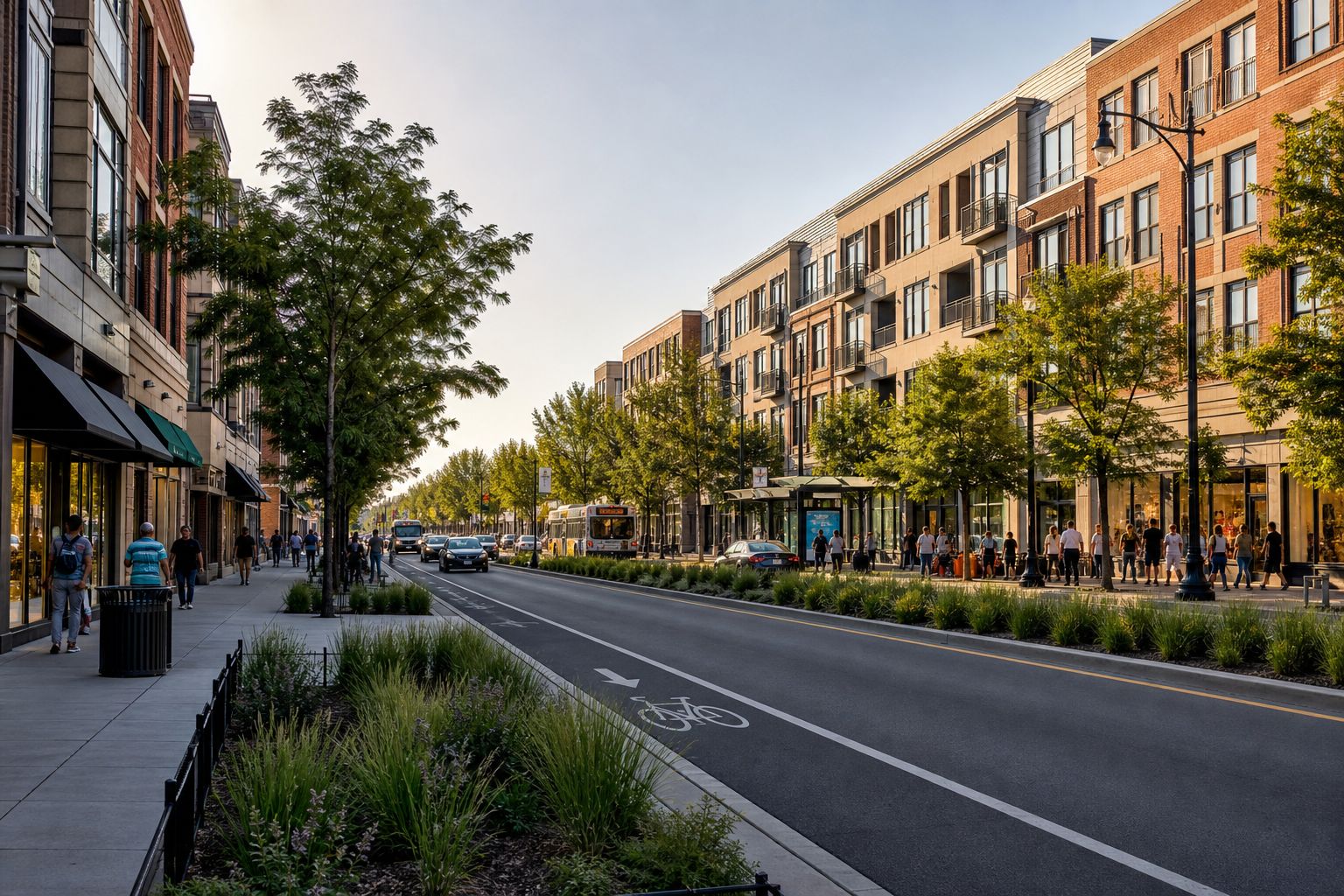
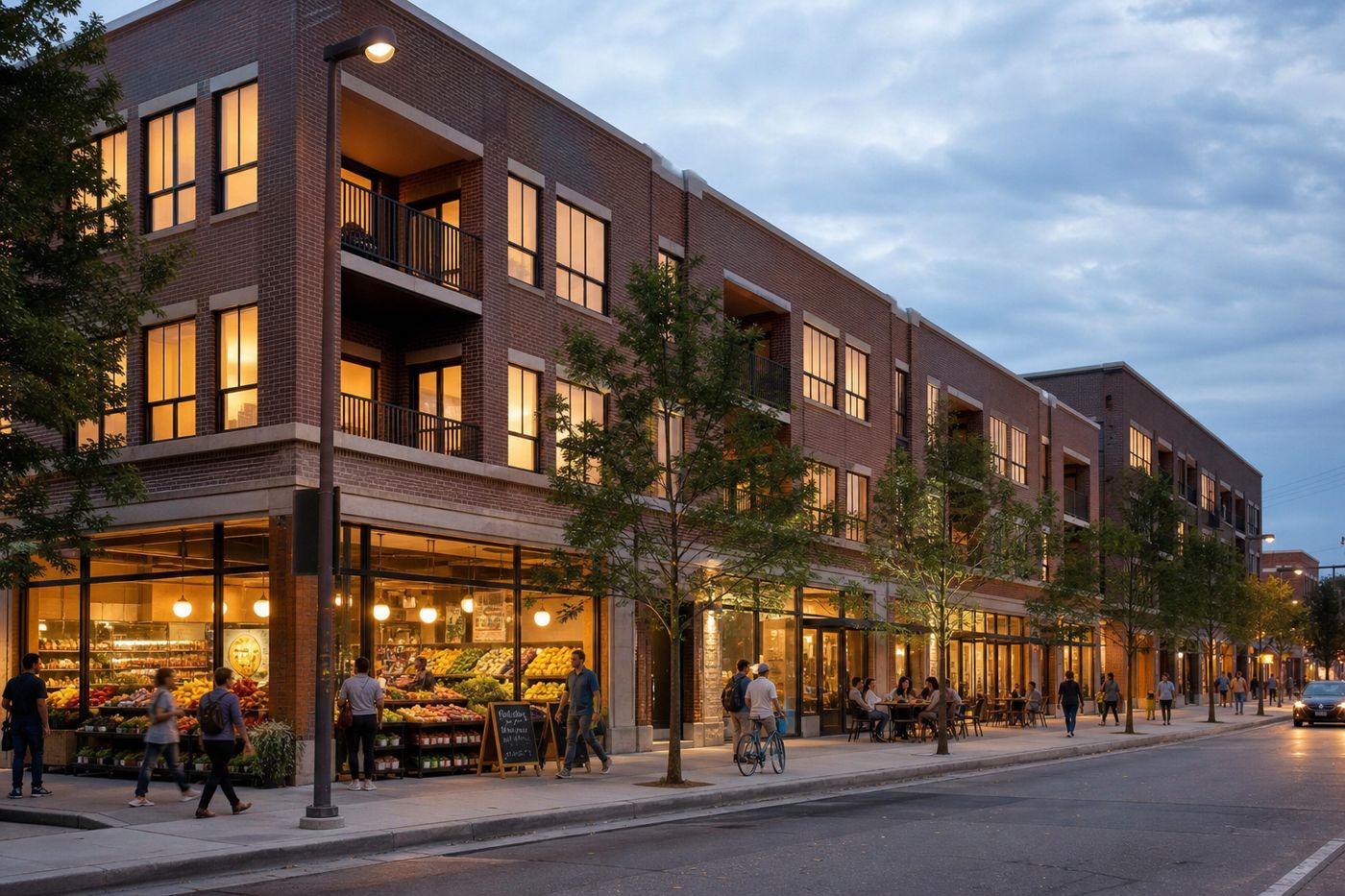
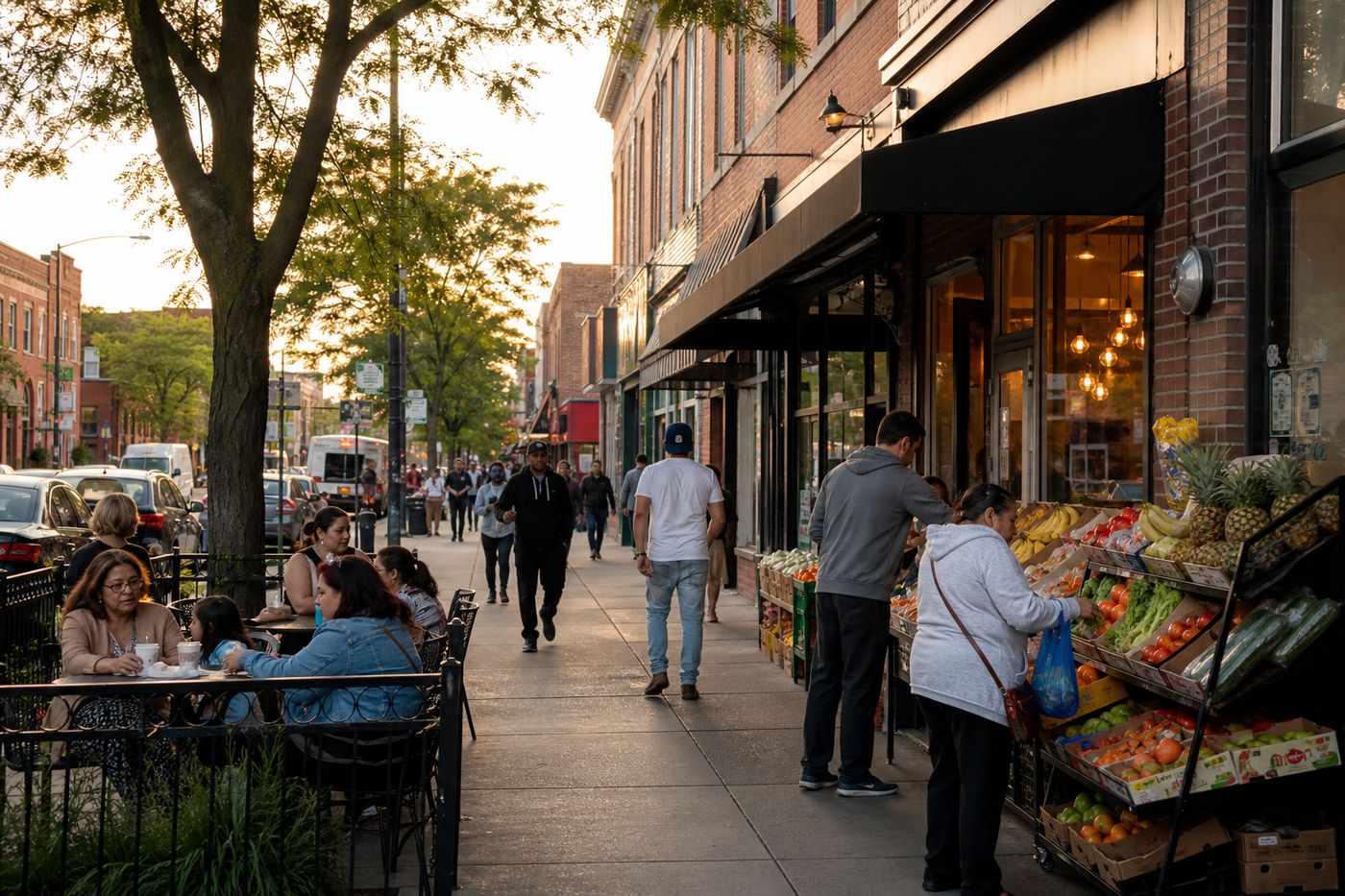
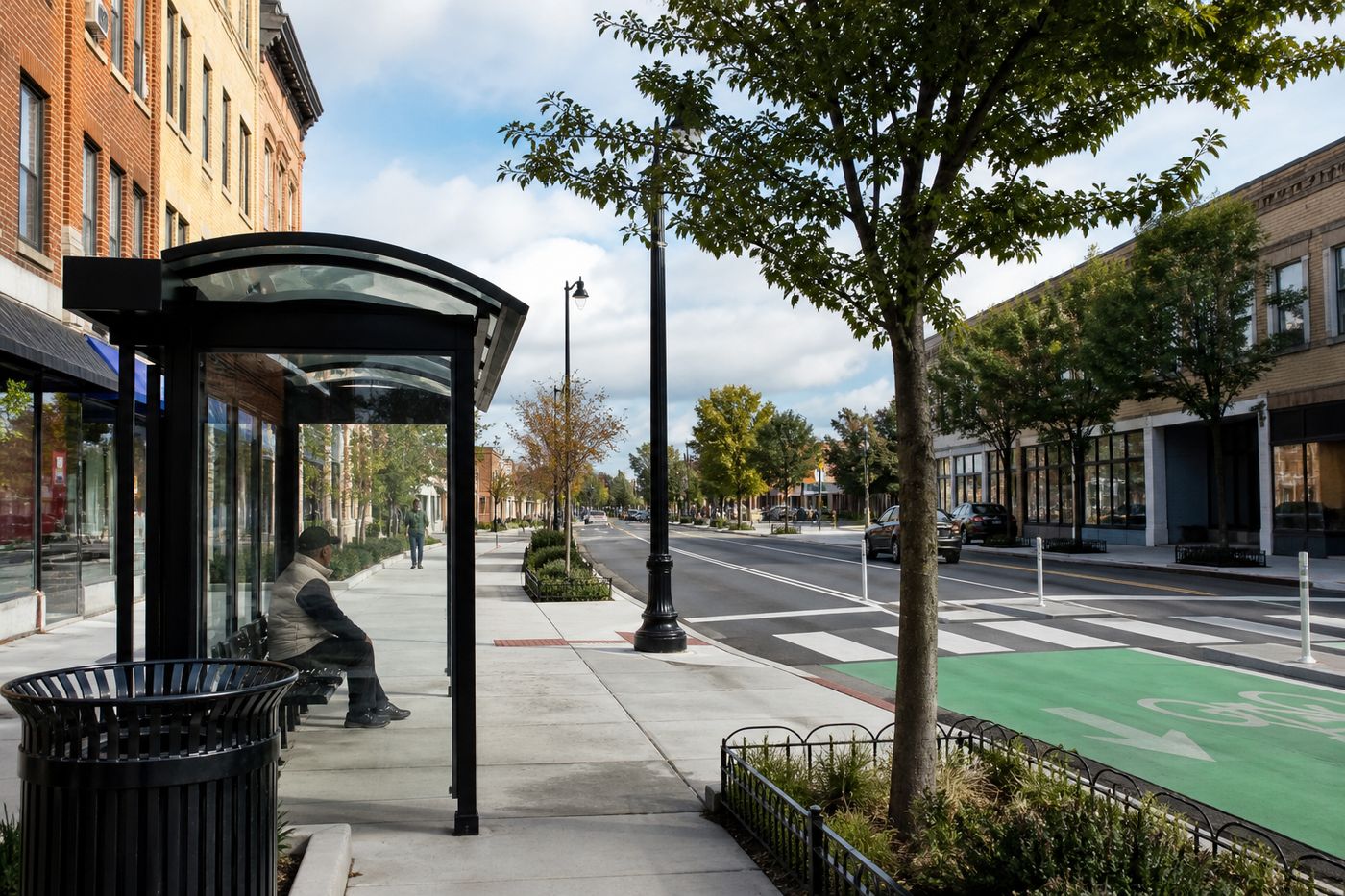
See 16th Street as it is. Then see the system it can become.
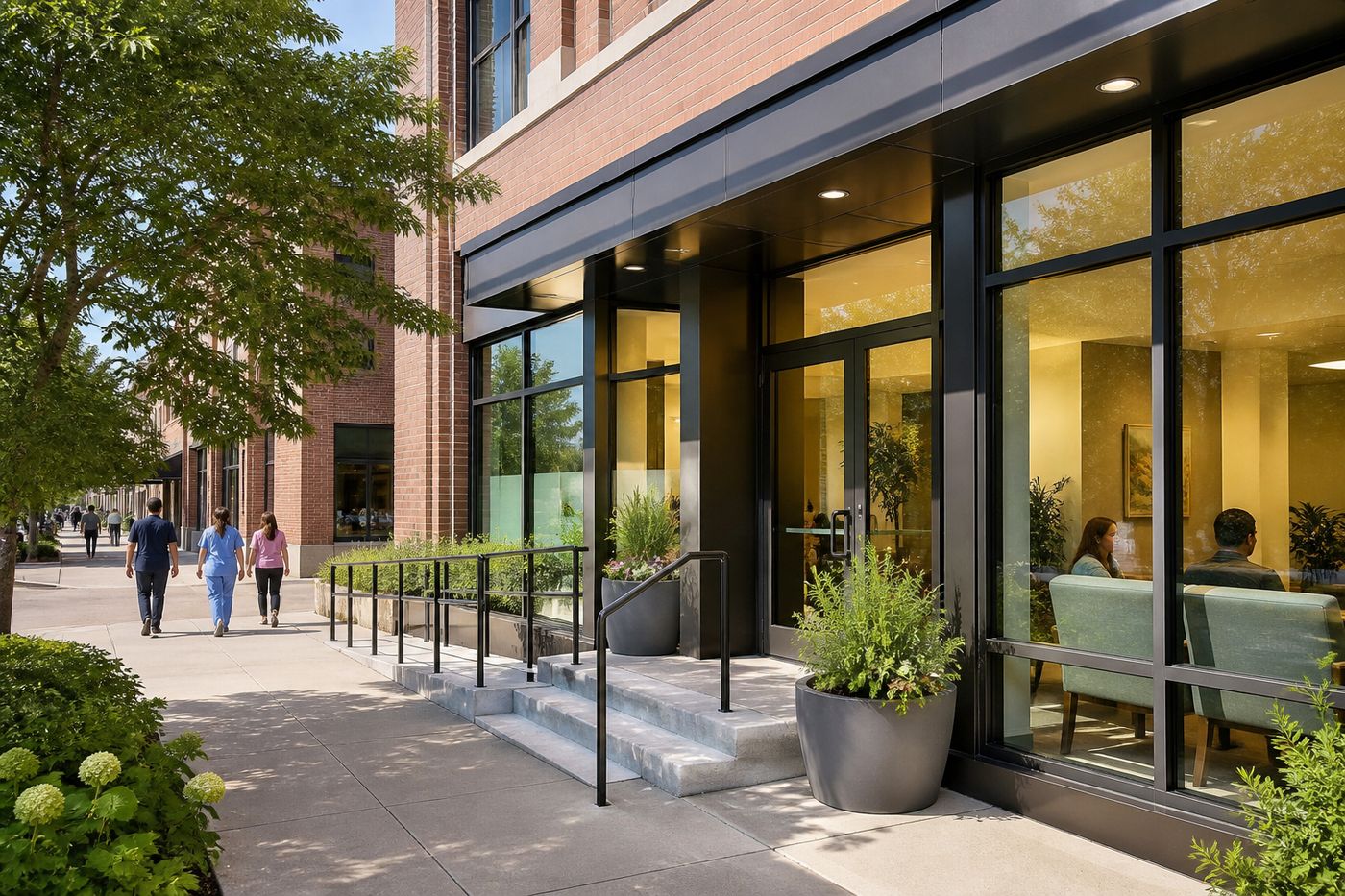
Street-level concept imagery is illustrative — not a parcel plan. Live satellite context remains available below for geographic orientation.
LIVE SATELLITE CONTEXT
Proof the corridor is already moving: Starling opened at 3243 W. 16th St. as a $1.4M transit-oriented community space; Reimagining 16th Street engaged hundreds of residents and stakeholders in 2024; City planning documents identify 16th Street as a key commercial corridor for streetscape and green-infrastructure attention.
THE MASTER REDEVELOPMENT SYSTEM
Not one project. A coordinated portfolio of mutually reinforcing interventions.
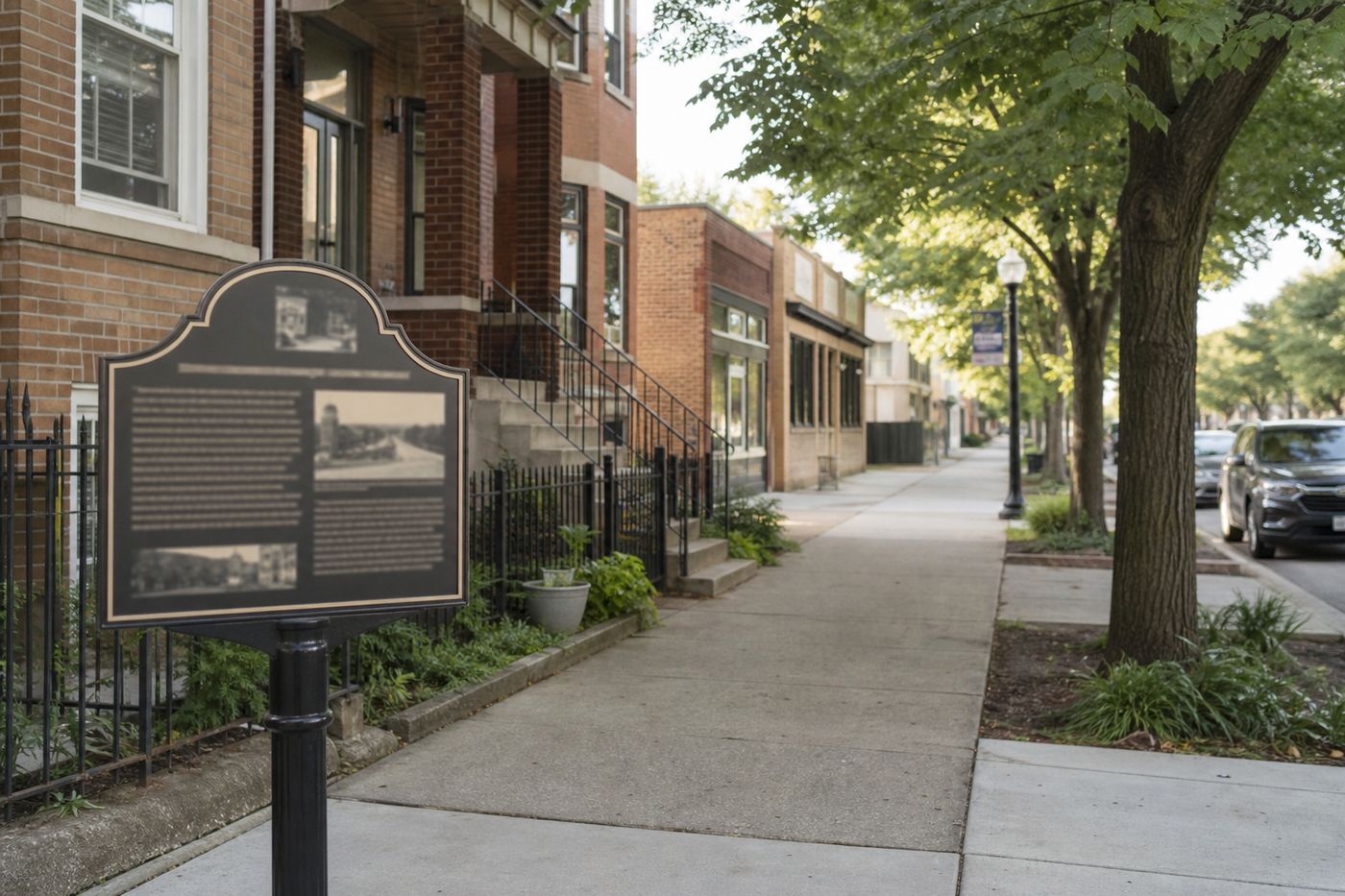
Heritage as place capital — interpretation, preservation, and corridor identity
HISTORY AS DEVELOPMENT CAPITAL
The neighborhood is not starting from zero. It is building on national civil-rights history.
Chicago History Museum documents that Dr. Martin Luther King Jr. moved his family to North Lawndale in 1966 to expose discriminatory housing conditions and advance the Chicago Freedom Movement. The master plan treats verified history as an economic and cultural asset: preservation, interpretation, public art, educational programming, heritage tourism, and place identity.
PreserveInterpretTeachVisitInvest
1966King family moves to North Lawndale
1968Fair Housing Act becomes federal law after the Chicago Freedom Movement era
2018North Lawndale Quality of Life Plan reinforces a community-led development framework
2024Reimagining 16th Street activates past/present/future storytelling
2026+Turn heritage into a corridor-wide development advantage
WHAT THE FUTURE 16TH STREET CAN ACTUALLY CONTAIN
A tenant and operator mix built around daily needs first, destination economics second.
These are recruitment targets and use types—not commitments. Final targets will be scored on demand, capital strength, local benefit, speed, operating history, site fit, and long-term durability.
Health + Stability Node
- Behavioral-health / harm-reduction hub
- Primary care / FQHC services
- Pharmacy + medication access
- Housing navigation + benefits enrollment
- Domestic-violence and family support partners
Food + Daily Needs Node
- Full-service fresh-food grocer
- Local food hall + vendor stalls
- Shared commercial kitchen
- Café / bakery / sit-down restaurant
- Household essentials + service retail
Finance + Ownership Node
- Bank or credit-union branch
- CDFI / small-business lending center
- Mortgage + homeownership counseling
- Insurance, tax, legal and accounting services
- Resident investment / ownership vehicle
Work + Enterprise Node
- Small-business incubator
- Workforce training + placement center
- Cowork + professional office suites
- Light maker / production space where zoning permits
- Construction and vendor pipeline hub
Heritage + Visitor Node
- Chicago Freedom Movement interpretation
- Public art and historic markers
- Walking / bike heritage route
- Gallery + event programming
- Conditional visitor center / hospitality uses
Mixed-Use Neighborhood Node
- Mixed-income apartments
- Missing-middle infill + homeownership
- Ground-floor neighborhood retail
- Childcare + youth/family services
- Green courtyards + public realm
PARTNER SCORECARD
Every potential player competes against the same standard.
| Criteria | Weight | What wins |
|---|---|---|
| Strategic fit | 20% | Directly advances multiple corridor pillars |
| Execution capability | 15% | Proven delivery, operating depth, strong controls |
| Capital strength | 15% | Can finance, guarantee or unlock follow-on capital |
| Community benefit | 15% | Jobs, services, ownership, affordability, procurement |
| Speed to deploy | 10% | Can move within the 5-year horizon |
| Institutional alignment | 10% | Compatible with City, State, federal and community goals |
| Long-term durability | 10% | Strong balance sheet / sustainable operating model |
| Measurable ROI to corridor | 5% | Quantifiable economic and social return |
BLENDED CAPITAL STACK
No single grant should be able to kill the plan.
The capital strategy layers multiple sources by asset class. Eligibility is project-specific and must be validated before application.
City commercial grantsNOF · CDG · storefront / corridor programsProject-specific
TIFHoman-Arthington · Ogden/Pulaski where geography/use qualifiesDistrict dependent
Housing capitalLIHTC · HOME/CDBG-linked sources · IHDA programs · conventional debtHousing assets
Federal tax-credit capitalNew Markets Tax Credit · Historic Rehabilitation Tax CreditEligibility dependent
Mission capitalCDFI debt · PRI/MRI · philanthropy · community-development lendersFlexible layer
Private capitalDeveloper equity · bank debt · sponsorship · institutional / impact investmentScale layer
Verified current facts: Chicago's NOF currently offers reimbursement grants up to $250,000 for eligible West/South/Southwest Side commercial/cultural projects; Chicago's CDG program supports projects from small awards through grants in excess of $5M; the IRS states the New Markets Tax Credit was made permanent in 2026; the federal historic rehabilitation credit is 20% of qualified rehabilitation expenses for certified historic, income-producing structures.
QUANTIFIED WITHOUT GUESSING
Use the baseline to test transformation targets before calling them forecasts.
This calculator converts user-selected planning targets into implied physical outcomes. It does not claim that those outcomes will occur.
Land activated61.6 acresbased on 2,054.3 total acres
Vacant housing units potentially re-occupied900 unitsif total housing stock held constant
Additional owner-occupied households665if occupied units held constant
These are arithmetic implications of selected targets—not demand forecasts, development commitments, or financial projections. Parcel-level feasibility, absorption, financing, zoning, displacement safeguards, and market demand must be tested before any target becomes an adopted KPI.
AGGRESSIVE FIVE-YEAR EXECUTION HORIZON
Year 1 de-risks. Years 2–5 compound.
Control the variables
Corridor boundary + parcel inventory, title/zoning/environmental screens, market study, operator recruitment, community engagement, governance design, capital stack, political/institutional alignment, preliminary site control, baseline KPIs.
Launch catalytic portfolio
Fund and start the highest-leverage combination of wellness, land/public realm, housing/mixed-use and commercial activation based on readiness and follow-on capital unlocked.
Prove the model
Open first anchors, publish measured outcomes, scale workforce/local procurement, assemble next parcels, recruit larger commercial partners and accelerate streetscape/heritage activation.
Scale corridor economics
Expand housing and business nodes, deepen ownership pathways, add destination programming, improve mobility/public realm, and refinance/recycle capital where feasible.
Institutionalize the transformation
Reach corridor-wide operating cadence, lock long-term stewardship, validate anti-displacement outcomes, document ROI, and establish the next 5–10 year capital program.
GOVERNANCE
Executive-led. Community-informed. Economically participatory.
Matthew Howery serves as provisional executive lead until a formal governance structure is selected. Residents receive structured advisory influence and economic participation, while executive authority remains with qualified leadership capable of managing cross-sector risk and long-horizon tradeoffs.
Recommended delivery modelMaster program leadSpecialist developers/operators by asset classIndependent financial/legal/technical diligenceResident + business advisory architecturePublished KPI / accountability reporting
SOURCE REGISTER
Built to be challenged.
Primary and authoritative sources are prioritized. Each material claim in the eventual executive master plan will be traceable to a source, calculation, or explicitly labeled assumption. Corridor concept imagery is illustrative and labeled as such.